How Terminal Hardware Choices Ripple Through ACH and Card Renewal Flows for Local Equipment Providers
Ines Krause · Oct 22, 2026
How Terminal Hardware Choices Ripple Through ACH and Card Renewal Flows for Local Equipment Providers
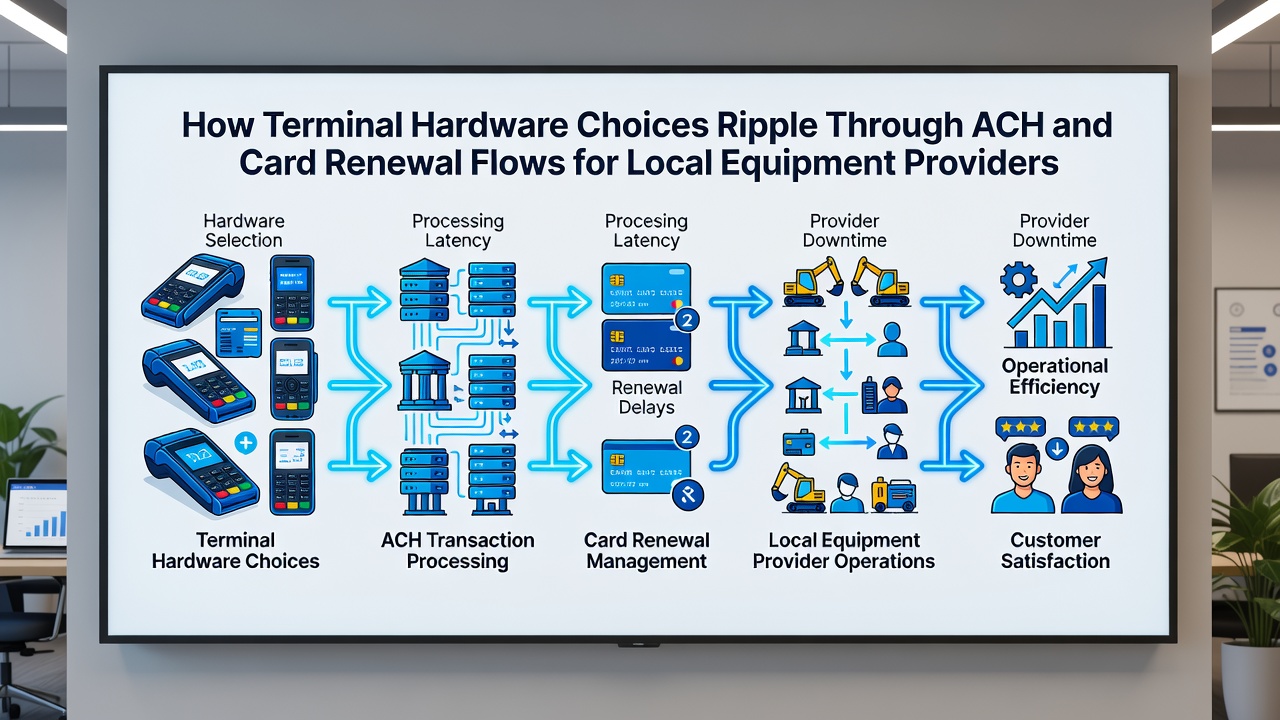
Local equipment providers often select terminal hardware based on factors like durability, connectivity options, and supported payment methods, yet these decisions extend far beyond initial setup and directly influence how ACH transfers and card renewals process through their systems. Hardware that supports integrated ACH capabilities alongside card readers can streamline recurring billing cycles, while standalone devices may require separate gateways that introduce additional steps in authorization and settlement sequences.
Hardware Specifications and Their Direct Impact on Renewal Authorizations
Terminal models equipped with advanced EMV chip readers and contactless modules tend to handle card renewal flows with fewer interruptions because they maintain compatibility with updated security protocols that issuers enforce during recurring transactions. In contrast, older hardware lacking these features can trigger higher decline rates when card details require re-authorization, forcing providers to intervene manually and delay the renewal cycle by several days. Research from industry reports shows that equipment rental firms using newer terminals experience smoother integration with digital wallet options, which in turn reduces the volume of ACH fallback transactions that occur when card payments fail.
ACH processing benefits when terminals incorporate direct bank transfer modules, allowing local providers to route renewal payments through automated clearing mechanisms without switching between multiple devices or applications. Data indicates that hardware supporting both card and ACH in a single interface cuts processing times by consolidating verification steps, whereas fragmented setups extend the window between authorization requests and final settlement. Observers note that providers in regions with strict data security standards benefit particularly from terminals certified for end-to-end encryption, which maintains compliance across both payment rails during high-volume renewal periods.
Settlement Timing Variations Across Different Terminal Configurations
Settlement schedules shift noticeably depending on whether a terminal connects directly to ACH networks or routes transactions through card processors first. Equipment providers who deploy terminals with native ACH support often see funds from renewals available within one to two business days, while those relying on card-only hardware encounter additional holds that can stretch to three or four days when volume spikes occur. This difference becomes especially relevant for providers managing subscription-style equipment leases that renew monthly, where cash flow predictability hinges on consistent release timing.
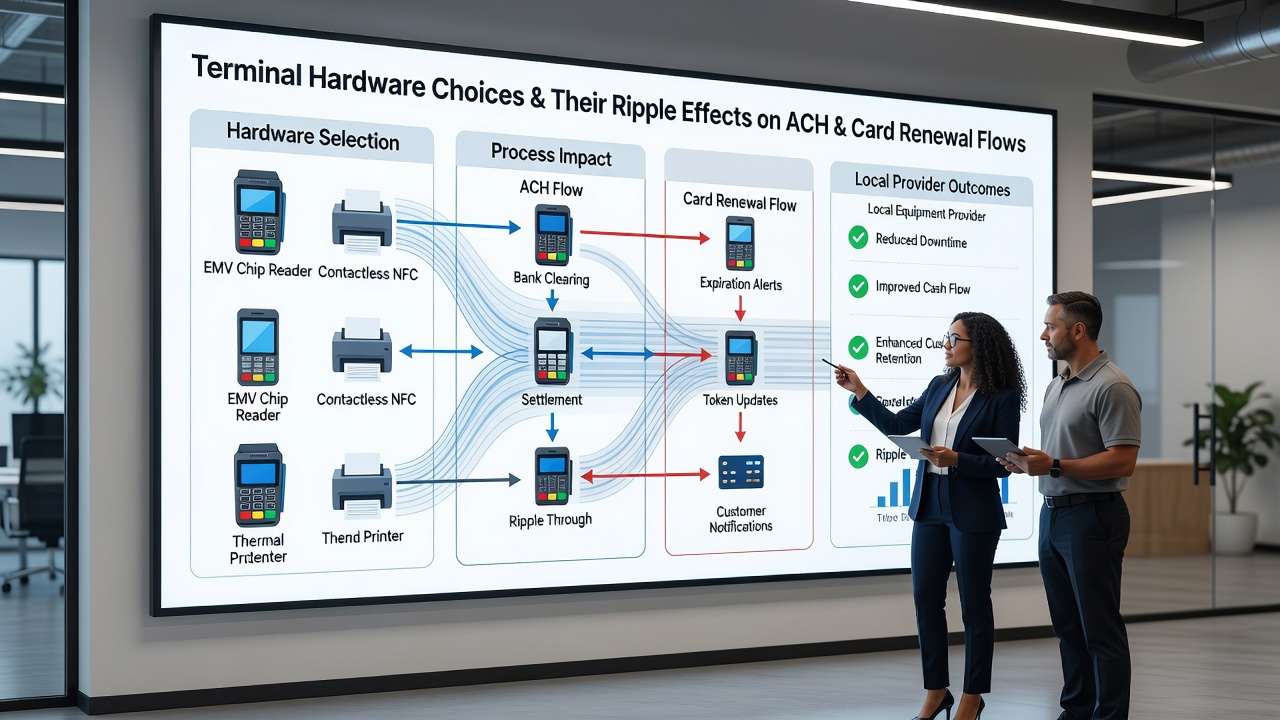
According to Nacha, standardized ACH rules have evolved to accommodate faster processing windows, and terminals that align with these updates enable providers to meet the new timelines without manual adjustments. Hardware choices also affect how providers handle exception cases, such as when a card renewal requires address verification or when an ACH transfer encounters a return code. Terminals with built-in retry logic and multi-rail switching capabilities reduce the administrative burden during these events, keeping renewal flows intact even as external conditions change.
Integration Challenges and Flow Adjustments in October 2026
By October 2026, several equipment providers began adopting terminals that incorporate updated API connections for both ACH and card networks, responding to regulatory shifts that emphasize real-time reporting of recurring transactions. These devices allow automatic rerouting of failed card renewals to ACH alternatives without requiring staff to re-enter customer data, which preserves continuity in billing cycles. Providers who upgraded earlier in the year reported fewer interruptions during peak renewal months, as the hardware handled protocol changes that older models could not accommodate seamlessly.
One study from Payments Canada revealed that terminals supporting cross-border ACH elements helped Canadian equipment suppliers manage renewal flows for clients across regions, minimizing currency conversion delays that previously compounded settlement gaps. The hardware itself determines whether providers can apply these efficiencies at scale or must maintain parallel systems that increase operational complexity during each renewal batch.
Conclusion
Terminal hardware selections create measurable effects throughout ACH and card renewal processes for local equipment providers, influencing authorization success rates, settlement speed, and overall workflow efficiency. Providers evaluating options benefit from reviewing compatibility with current network standards and integration capabilities that support both payment types without added layers. As processing environments continue to develop, hardware that adapts to evolving requirements positions providers to maintain consistent renewal flows across their operations.