How Nonprofit Groups Balance Gateway Options Against Variable Rates in Recurring Donor Programs
Gisela Lehmann · Sep 24, 2026
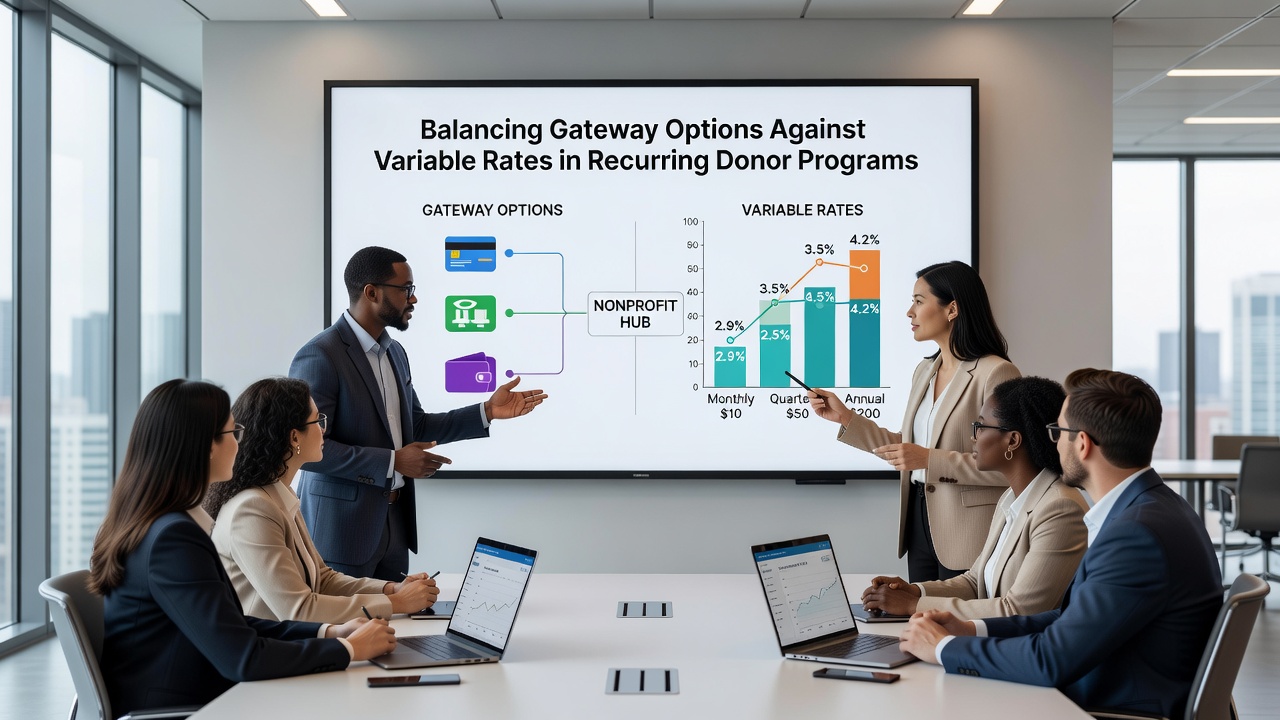
How Nonprofit Groups Balance Gateway Options Against Variable Rates in Recurring Donor Programs
Nonprofit organizations that rely on recurring donor programs face ongoing decisions about payment gateways and the variable rates those systems impose, with observers noting that these choices directly affect net revenue available for mission work. Data from industry reports shows that many groups evaluate processors such as those offering ACH transfers alongside credit card options because interchange fees fluctuate based on card type, transaction volume, and processing network. Researchers at academic institutions have documented how smaller organizations often start with integrated platforms that combine donor management software and payment handling, yet larger entities frequently compare standalone gateways to reduce per-transaction costs that can range from 2.2 percent plus fixed fees for standard cards to lower percentages for ACH pulls.Gateway Selection Factors for Recurring Revenue
Groups managing monthly or quarterly contributions examine gateway features including authorization success rates, integration with donor databases, and compliance with data security standards, while variable rate structures determine the final amount retained after each cycle. According to figures from regulatory filings, credit card processing costs can shift when card networks adjust interchange tables, prompting organizations to model scenarios where high-volume donors use premium cards that carry elevated fees compared with debit or bank transfer methods. Experts have observed that nonprofits weigh these variables against donor preferences, noting that some contributors favor credit cards for reward points even though those options increase processing expenses for the recipient group.
One study revealed that organizations adopting multiple gateways report improved retention when they route transactions based on donor payment history, routing ACH-preferring supporters through lower-cost channels while maintaining card options for others. Settlement timing also enters the calculation because certain gateways release funds within one business day whereas others extend to three days, affecting cash flow planning for programs with fixed operational schedules.
Rate Structures and Cost Modeling
Variable rates in recurring donor setups typically include a percentage component plus a per-transaction charge, and data indicates that these elements compound across thousands of small gifts common in nonprofit portfolios. Observers note that groups frequently build internal spreadsheets projecting annual costs under different processor contracts, factoring in volume discounts that become available once monthly processing exceeds defined thresholds. Those who've studied this process know that international donors introduce additional variables through cross-border fees, leading some organizations to segment their donor base geographically before assigning gateway pathways.
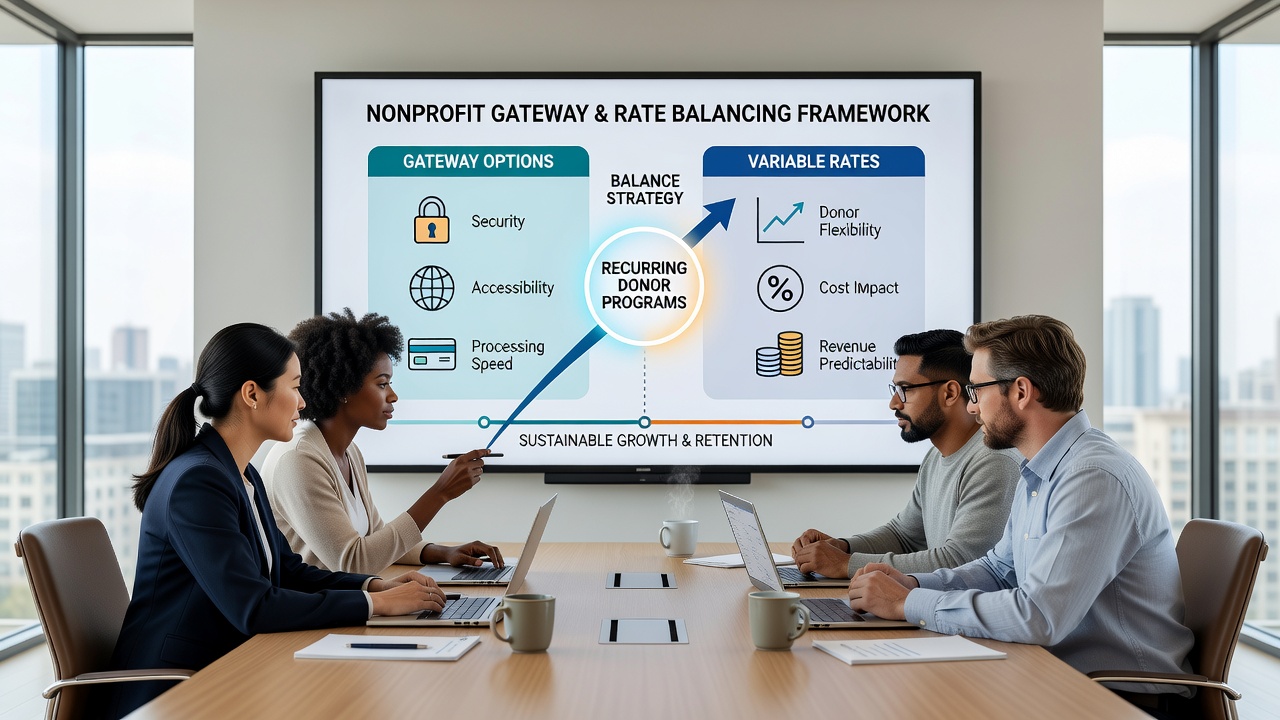
Research indicates that blended rate agreements, where a single percentage applies across card types, simplify forecasting yet may prove more expensive overall than tiered pricing for organizations with diverse donor payment profiles. In September 2026 several major processors are scheduled to implement updated fee schedules tied to network changes, and analysts project that nonprofits monitoring these announcements will adjust routing rules in advance to protect contribution margins.
Practical Approaches Observed Across Organizations
Case examples documented by research institutions show groups testing gateway switches during renewal cycles to compare actual performance metrics against vendor projections, with success measured through retention statistics and net revenue per donor. People managing these programs often discover that donor communication about payment method changes requires careful wording to avoid unintended cancellations, especially when moving supporters from card-based to ACH options. Industry data reveals that organizations maintaining relationships with two or more gateways gain leverage during contract negotiations, allowing them to shift volume toward the provider offering the most favorable terms at any given time.
European regulatory sources have published guidance encouraging transparency in fee disclosure for charitable transactions, and similar reporting expectations appear in Canadian and Australian charity oversight materials. Nonprofits that align their internal tracking systems with these standards report clearer visibility into how variable rates erode total funds raised through recurring programs.
Conclusion
Nonprofit groups continue refining their approaches to gateway selection and rate management as recurring donor programs expand, relying on data analysis and contract comparisons rather than fixed strategies. Evidence from multiple regions demonstrates that organizations tracking interchange fluctuations and settlement variables achieve more predictable net revenue, supporting sustained program delivery without reliance on one-time campaigns. Continued monitoring of processor updates, including those planned for September 2026, remains a documented practice among entities seeking to optimize these operational elements.