Cash Flow Timing in Boutique Winery Tasting Rooms Merging On-Site Terminals with Online Wine Club Renewals
Gisela Lehmann · Nov 5, 2026
Cash Flow Timing in Boutique Winery Tasting Rooms Merging On-Site Terminals with Online Wine Club Renewals
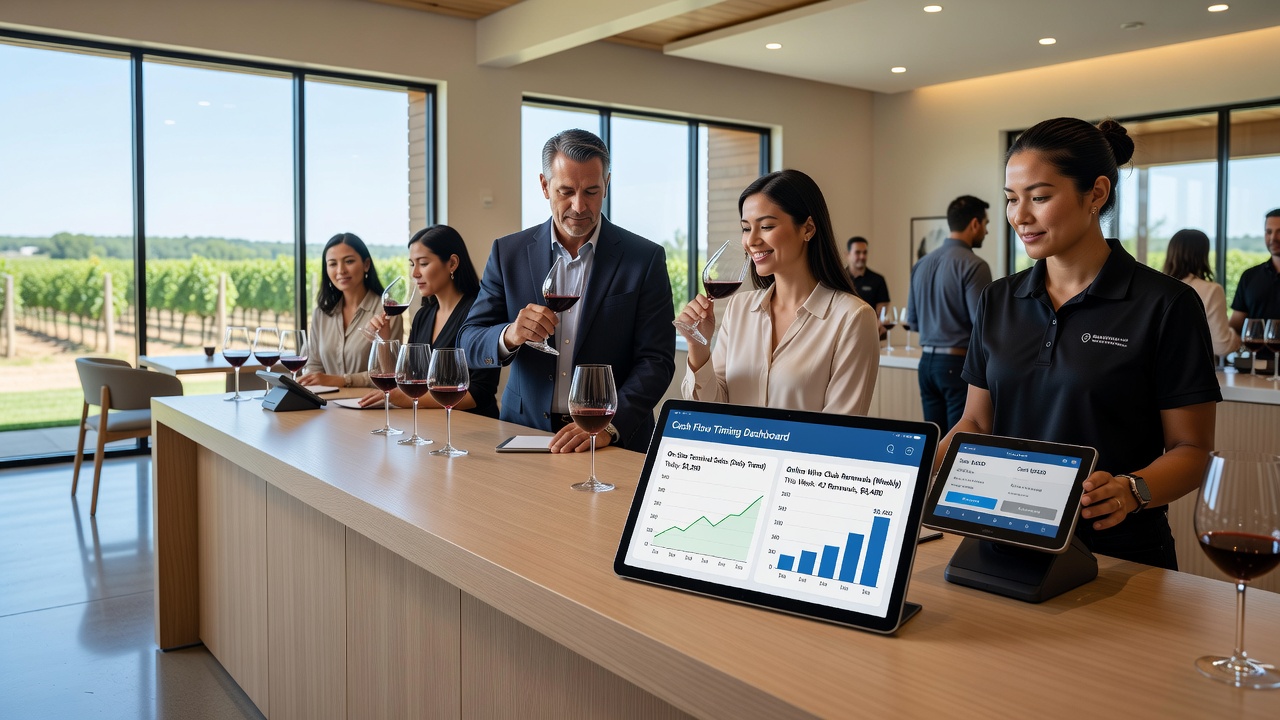
Boutique wineries often run tasting rooms that accept payments through on-site terminals while simultaneously managing wine club renewals through online platforms, and the timing differences between these channels create distinct cash flow patterns. Credit card authorizations at the terminal typically clear within one to three business days after batch settlement, whereas online club renewals processed via ACH transfers can take two to five days to reach the merchant account depending on the originating bank and the day of the week the transaction initiates.
Terminal-Based Transactions in the Tasting Room
Staff at these wineries process card payments on hardware terminals during visits, and the authorization step reserves funds immediately even though actual settlement occurs later. Observers note that weekends and holidays extend this window because batch submissions often wait until the next banking day, which means a Friday tasting room sale might not appear in available funds until the following Tuesday or Wednesday. Data from payment processors shows average settlement cycles for card-present transactions remain shorter than card-not-present ones, yet the gap narrows when wineries batch multiple terminal captures together at the end of each shift.
Online Wine Club Renewal Mechanics
Renewal invoices sent through digital platforms pull from stored payment methods, and the choice between credit cards and bank transfers directly influences when those funds become usable. Credit card renewals follow similar authorization and settlement timelines to terminal transactions, yet ACH-based renewals bypass interchange fees while extending the float period before deposits post. Researchers tracking subscription merchants report that November renewals, which often coincide with holiday planning cycles, show higher volumes of ACH selections because members seek to avoid card processing surcharges that some wineries pass through.
Combined Effects on Liquidity Management
When tasting room sales and club renewals feed into the same operating account, the staggered arrival of funds requires careful forecasting to cover supplier payments and payroll. One California winery tracked deposits over a six-month period and found that terminal batches contributed 60 percent of daily inflows within 48 hours while online ACH renewals added the remaining portion across a four-day average window. This mix creates predictable dips mid-week when weekend terminal volume has settled but mid-month club pulls remain in transit. Payment gateway reports indicate that merchants blending both methods experience variance in available balance of up to 35 percent between Thursday and Monday compared with operations using a single channel.
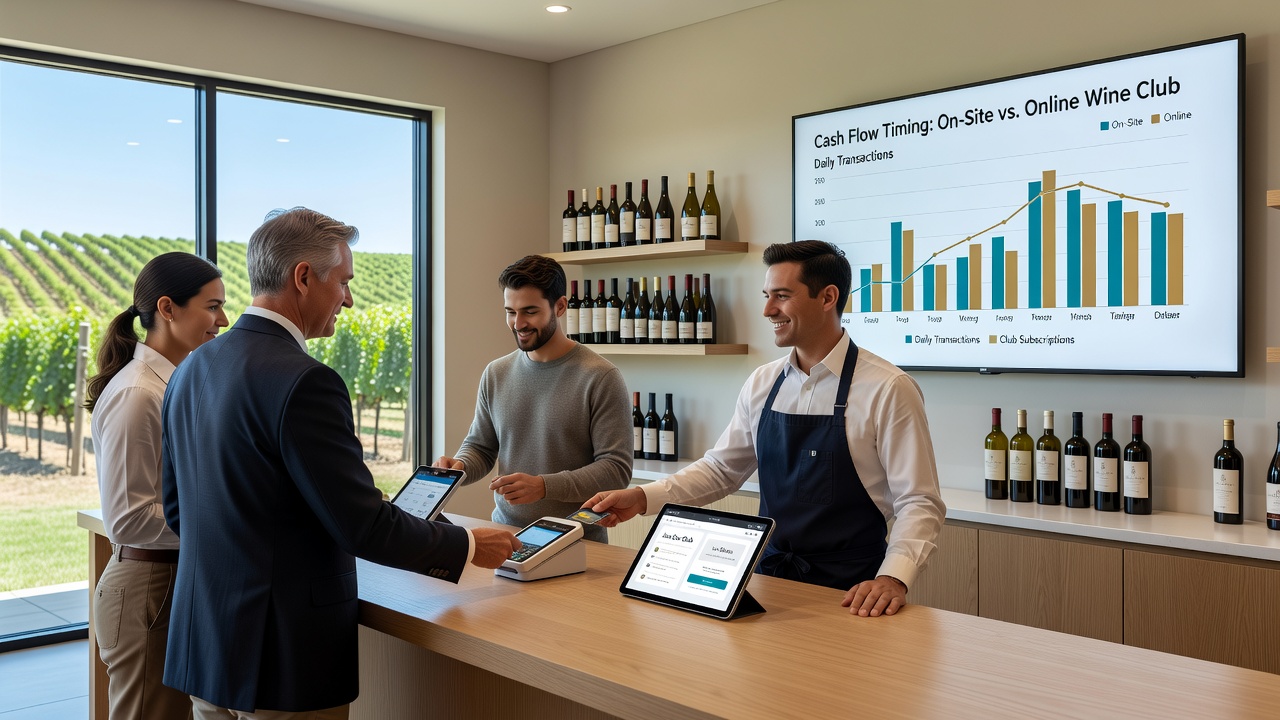
Adjustments such as scheduling ACH pulls for the first business day after a tasting weekend can smooth some of these fluctuations because the longer ACH cycle overlaps with faster terminal settlements. Bank data compiled by the Federal Reserve Bank of New York reveals that small merchants using mixed payment streams maintain higher average reserve balances to buffer timing gaps, and the pattern holds across seasonal peaks including harvest-related events.
Authorization Holds and Reserve Requirements
Terminals place temporary holds during card authorization that can last up to seven days if a batch fails to settle promptly, and online systems apply similar holds when stored credentials trigger retries after initial declines. Wineries that process both streams notice overlapping holds during high-volume periods such as release weekends, which temporarily reduces the visible balance even though the underlying sales remain valid. Industry analyses from Payments Canada document that authorization windows lengthen when international cards appear in either channel, adding another layer of delay for properties that attract overseas club members.
Settlement Variations Across Gateways
Gateways chosen for online renewals sometimes route transactions through different processors than those used for on-site terminals, producing separate reporting streams that staff must reconcile before projecting cash positions. A winery in Oregon that switched its online platform to a processor aligned with its terminal provider reduced reconciliation time by two hours per week and shortened the average delay between authorization and deposit visibility by roughly 24 hours. Figures released by the Australian Payments Network show comparable improvements when merchants consolidate gateway relationships, although the benefit appears most pronounced for operations under $2 million in annual card volume.
Seasonal Patterns and November 2026 Considerations
November typically brings increased club renewal activity as members lock in allocations ahead of the holidays, and terminal traffic rises with tasting room visitors seeking gift purchases. Payment timing data collected through 2025 indicates that the overlap of these streams produces the widest cash flow swings of the year, with some properties reporting multi-day gaps between outflows for bottling supplies and incoming deposits. As of November 2026, updates to NACHA operating rules regarding same-day ACH processing are scheduled to take effect, which may compress the settlement window for online renewals and thereby narrow the timing differential with terminal batches.
Conclusion
Merchants operating boutique winery tasting rooms alongside digital wine clubs encounter cash flow timing shaped by the distinct settlement characteristics of on-site terminals and online renewal platforms. Terminal batches deliver funds on shorter cycles while ACH renewals extend availability, and the resulting pattern requires monitoring of authorization holds, gateway routing, and seasonal volume spikes to maintain steady liquidity. Observers tracking these blended operations note that alignment of processing partners and awareness of rule changes such as those arriving in November 2026 can reduce variance in daily available balances without altering underlying sales volume.